
Please download our ICAN-ICAR 2025 Report Here
Assessment
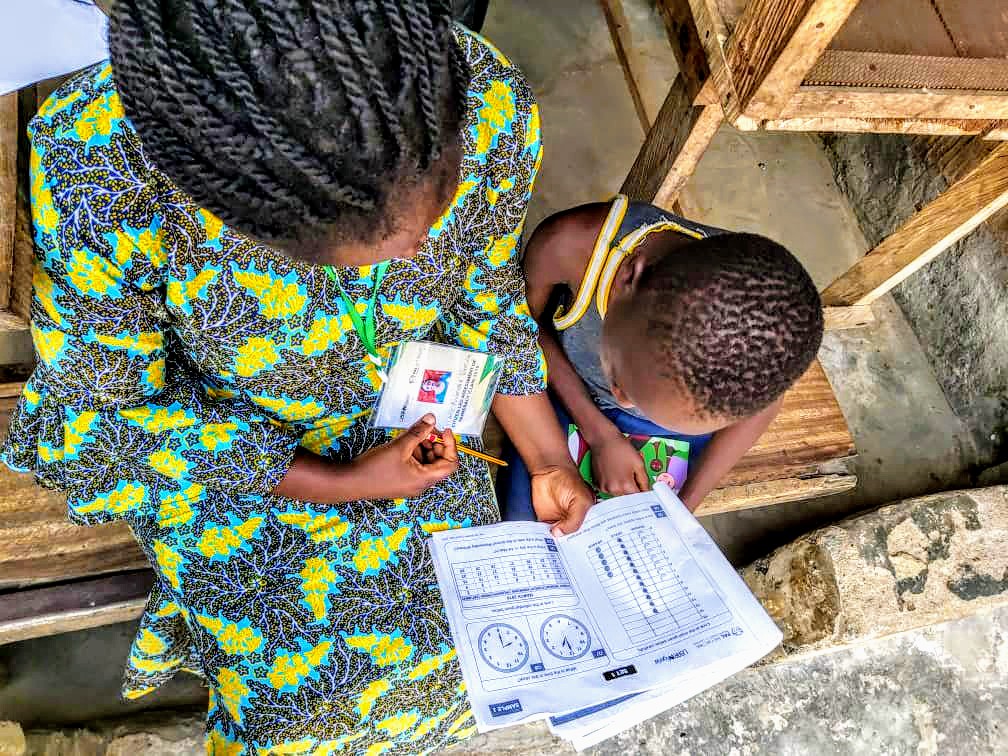
PAL Network generates robust evidence on learning outcomes through oral one-on-one assessments conducted in households. We support members with their existing Citizen Led Assessment (CLA) programmes and further guide prospective members to establish new CLAs within their countries.
ICAN-ICAR
A Globally Comparable, Low-Cost, and Scalable Common Assessment of Children’s Foundational Learning
The PAL Network’s latest initiative, the International Common Assessment of Numeracy (ICAN) and International Common Assessment of Reading (ICAR) is an evolution of the CLA model and brings together a decade long experience in testing and scaling citizen-led assessments across 13 countries, having surveyed over 50,000 children, and having undergone numerous field trials and item analyses to offer a reliable, actionable, comparable snapshot of children’s foundational learning. The assessment tools are in alignment with the Global Proficiency Framework (GPF) and SDG4.1.1(a) reporting requirements and will be publicly available.
Why is it needed?
To highlight the magnitude of the challenge to inform policies and interventions
To strengthen PAL Network and member voice to engage stakeholders to advocate for Foundational Literacy and Numeracy (FLN)
To encourage knowledge sharing and cross-country learning within local actors, members and countries
2025 Report, Tools, and Technical Documents
Reports
Tools
Technical Documents
The State of Foundational Learning in the Global South: 2025 Report is the People’s Action for Learning (PAL) Network’s landmark publication detailing foundational literacy and numeracy levels across the Global South. Launched on November 25, 2025, this report marks a historic baseline, providing a coherent and comparable picture of foundational learning aligned with Sustainable Development Goal (SDG) 4.1.1(a).
By reaching children in their homes—including those out of school or frequently absent—this initiative restores visibility to learners often missed by traditional school-based assessments. The 2025 cycle was implemented at an unprecedented scale, directly assessing more than 89,000 children across over 59,000 households in 12 countries, including Bangladesh, Kenya, Mali, Mexico, Mozambique, Nepal, Nicaragua, Pakistan, Senegal, Tanzania, Uganda, and a school-based pilot in Botswana.
Utilizing the technically robust International Common Assessment of Numeracy (ICAN) and Reading (ICAR) tools, the report offers nationally representative snapshots disaggregated by gender, age, and location. Through a rigorous Pairwise Comparison Method (PCM) benchmarking exercise, the findings establish global Minimum Proficiency Levels (MPLs), revealing substantial variation in achievement and highlighting the urgent need for sustained investment in foundational skills.
This report serves as more than a dataset; it is a catalyst for systemic reform, providing national governments and practitioners with the actionable evidence required to inform policy, strengthen accountability, and ensure that every child—regardless of their schooling status—has the opportunity to learn.
The State of Foundational Learning in the Global South: 2025 Report
File size: 21.41 MB
Hits: 5
This section will have documents soon.
This section will have documents soon.