Tag: Kenya

EnglishFrenchKenyaPAL NetworkSpanish

Rekindling Hope Amidst Hunger

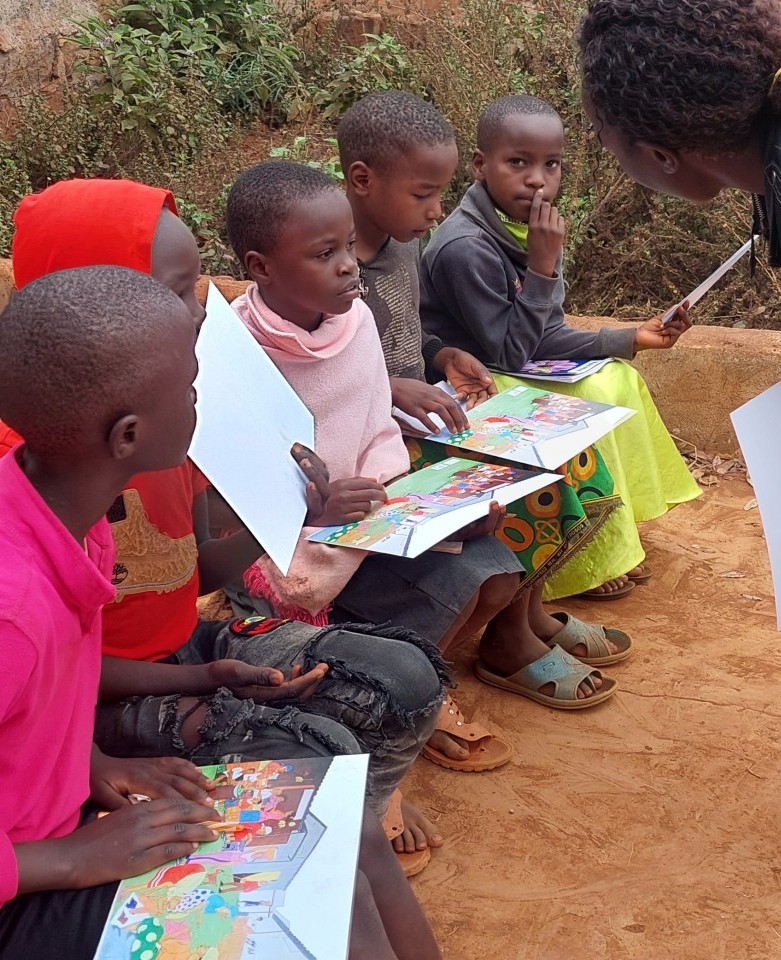
‘He told me he was too weak to go to school yesterday’, this mother’s explained when we asked why her son had not gone to school. The boy, let’s call him Ekiru, is one of the star learners. He is definitely overage – we estimate possibly in his late teens. He is the first of seven children. He spent his early years herding. In 2018, an enrollment drive allowed him to access school, and the Accelerated Learning Program is supporting to retain him in school, by improving his reading skills.

EnglishKenyaPAL Network

Learning Camps- Hope for learners left behind

Were it a matter of simple logic, one would argue that the reduction of workload would fundamentally see performance shoot above average. Strikingly, even with fewer subjects, primary level candidates left school with “near average” literacy competencies.

Baela
EnglishKenyaPAL Network

How fair have we promoted the rights of children with disabilities to education?

Quite a sizeable number of children with disabilities have been enrolled in public schools but are excluded from learning because facilities and infrastructure have not been adapted to their needs.

EnglishKenyaPAL Network

How Civil Society Can Supply Rigorous Data for the SDGs: The Citizen-Led Assessment Approach

Failure to achieve the Millennium Development Goal of universal primary education in many low-income countries, coupled with the uncomfortable fact that millions of children who are in school are not learning the basics, have resulted in a ‘global learning crisis’ affecting more than one-half of all children and adolescents, according to estimates from the UNESCO Institute for Statistics (UIS)

EnglishKenyaPAL Network

Learning for the Left-Behind: A Much Needed Paradigm

TaRL presents a paradigm shift from traditional approaches to education. As opposed to memorizing facts and formulae, TaRL breaks down concepts to vividly demonstrate the logic behind academic concepts.

EnglishKenyaPAL Network

What age should our children start schooling to optimize on learning outcomes?

In Kenya, the Ministry of Education’s (MOE’s) guidelines dictate that a child should start schooling at the age of 6 and complete the primary schooling cycle in class 8 at the age of 13.

EnglishKenya

Celebrating East Pokot’s ‘Missionary’ teachers

It’s 8.30 am as we arrive at Tiling’wa Primary School, in the East Pokot region of Kenya. Expecting to find children finishing the first lesson of the day, we find them just leaving their morning assembly. We quickly meet the acting head teacher and introduce ourselves. He tells us that the head teacher is currently on maternity leave. Mr. Kitur is responsible for teaching Class 1. However, due to severe teacher shortages in their school, he also pops in Class 3 during the morning as they currently do not have a teacher.

EnglishIndiaPakistanPAL NetworkUncategorized

How to help people love learning

We listen to the same music.
We watch the same movies.
We eat the same food.
We farm the same land.

EnglishPAL NetworkTanzaniaUncategorized

RISE in Tanzania

Tanzania is the first country on the agenda as RISE launches its international research programme to find ways of improving learning on a large scale throughout the developing world.

EnglishKenyaMaliMexicoNigeriaPakistanPAL NetworkSenegalTanzaniaUgandaUncategorized

Achieving Education for All

Using the Education for All (EFA) global movement as the setting, this book surveys the complex labyrinths of international education policy making, the design and implementation of system-wide educational reform, and the assessment of learning outcomes in the African context.